Barbara Mettler, a pioneer of Mettler-based Creative Dance, regarded dance as a central art. She believed that before human beings learned to speak, sing, write or draw, we already knew how to move in order to communicate and connect with the world.
Learning dance is not only about learning beautiful movements. First of all, learning dance is about learning how to be HUMAN. Learning to be present in your own body. Learning to sense space, time and rhythm. Learning when to move forward and when to step back. Learning to listen, interact and express what words sometimes cannot reach.
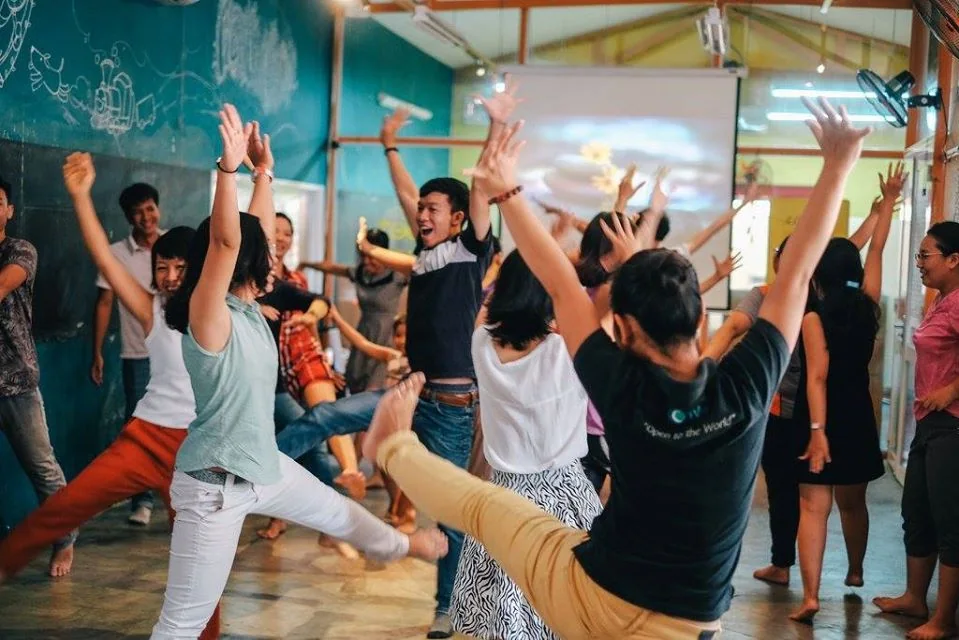
More than five years ago, when we worked with Mettler Studios in the United States to bring Creative Dance to Vietnam, we encountered many doubts:
“Why is the teacher so old?”
“Why is there no music?”
“Why do we have to wear black?”
“Why does every session look almost the same?”...
Time gradually answered those questions. After nearly five years, many participants told us that they realised what they were learning was not how to dance, but how to be present in each movement of their own body.
The Mettler Creative Dance community has grown to more than 160 Vietnamese participants from many provinces and cities. Each person comes to class—and continues practicing Creative Dance—for a different reason.
- Teacher-training students and young educators come seeking a more creative language for the classroom, helping children grow in confidence and making each learning session more alive.
- Psychologists and therapists study dance to discover another way of accompanying clients when words are no longer enough, and to enrich their own embodied experience before continuing on a path toward becoming expressive-arts or arts therapists.
- Trainers, coaches, educators and people working in human development learn dance to bring movement into their work, helping people learn through the whole body rather than through analysis alone.
- Doctors and nurses from oncology and psychiatric hospitals come to dance as a way of caring for themselves after exhausting days, while holding the hope that movement may one day become part of more holistic care for patients.
- Dancers, painters and theatre directors return to Creative Dance to set technique and professional identity aside for a while and rediscover the original feeling of being a vivid, natural human being.
- Women in their sixties and seventies sometimes allow their bodies to move freely for the first time in their lives. Watching them, I often feel as if they are completing an unfinished dream of the carefree girl they once were—or perhaps of their mothers and grandmothers.
- Women entering perimenopause may arrive with hot flashes, insomnia and hormonal changes. Through very gentle organic movement, they learn to listen to the body, regulate the nervous system, balance emotion and rediscover calm from within.
- Postpartum mothers come to reconnect with a body that has changed through motherhood, and to feel once again that they are not only mothers, but also themselves.
- Some people enter class shy or cautious because of familiar gender expectations. Through movement, they gradually discover that every body has the right to be soft, strong, creatively free and simply itself.
- Young Gen Z participants arrive tired from screens, academic pressure, work, numbers and sleepless nights. Many come out of curiosity, then stay because they discover that an inner artist is still there—able to play, listen and enjoy being alive.
- Others are moving through grief, crisis or the large questions of life. Dance does not erase pain. But it can help a person take a deep breath, return to the present moment and slowly rediscover vitality.
A JOURNEY WITH DANCE AT VDMT
In the age of AI, body wisdom—the capacity to sense, create and connect—becomes even more precious.
At VDMT, you can begin from wherever you are:
OPEN | Creative Dance: a 16-week experience of returning to the body, moving freely, creating and connecting. From there, you can continue toward Creative Dance facilitator training through programs in Vietnam and the United States.
Dance/Movement Therapy:
You may begin with individual therapy sessions online or in the studio to support mental health and emotional well-being.
If you want to develop personally or professionally, you can continue with learning in Body Wisdom and Dance/Movement Therapy, then gradually move deeper into practice and professional training if that is the path you choose.
Whether you come to dance for experience, psychotherapy, personal development or professional practice, the journey begins with something simple:
Return to the body — because every change begins with MOVEMENT.