
In modern life, where the mind is often overloaded by anxiety and stress, the body is frequently forgotten—or pushed beyond its limits.
Neuroscience and psychology have shown that the body can hold memories of painful experience, and that the body can also become a doorway to recovery and renewal when it is listened to with care.
Two internationally recognized body-oriented approaches—Dance/Movement Therapy (DMT) and Somatic Experiencing (SE)—grew from this foundation. Each offers a distinct language of the body, reaching into deep layers of emotion, mind and memory.
Dance/Movement Therapy creates a space where art and science meet, where people can rediscover inner freedom, connect with community and explore body wisdom through rhythm, creativity and expression, while also supporting trauma recovery and resilience.
Somatic Experiencing focuses on releasing psychological trauma that has become “frozen” in the body, restoring the capacity for self-regulation and rebuilding an internal sense of safety.
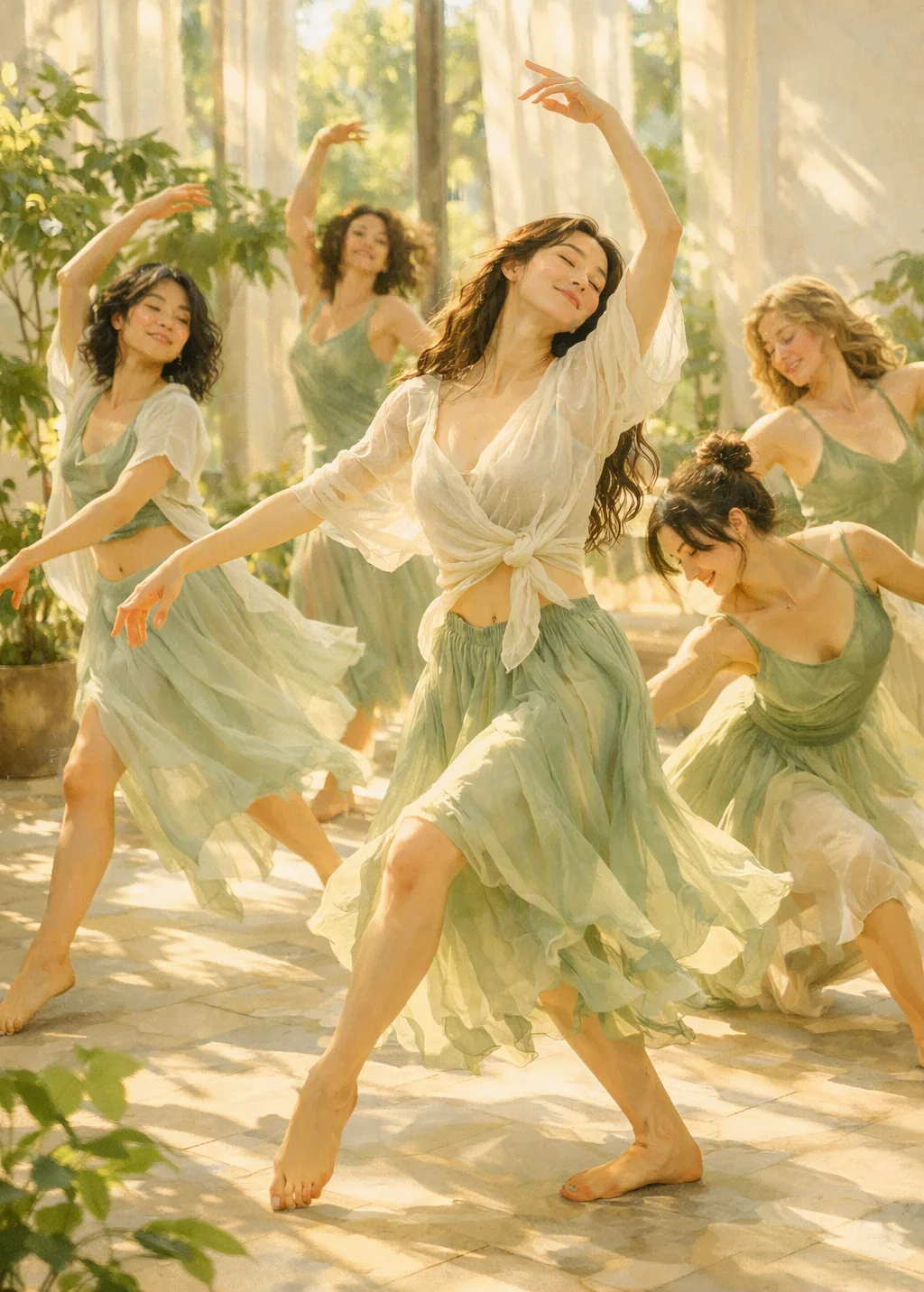
Dance/Movement Therapy (DMT)
History & scientific foundations
• Emerged in the United States in the 1940s through pioneers such as Marian Chace and Trudi Schoop.
• In 1966, the American Dance Therapy Association (ADTA) was established.
• ADTA definition: “The psychotherapeutic use of movement to promote emotional, social, cognitive and physical integration of the individual.”
• Koch et al. (2019): an analysis of 266 studies involving more than 16,000 participants reported that DMT can help reduce anxiety and depression while improving social connection and quality of life.
Areas of application
• Community mental health: supporting stress reduction, depression and anxiety.
• Healthcare & hospitals: supporting people with cancer and chronic illness, and psychological or psychiatric rehabilitation.
• Education & personal development: strengthening social skills, creativity and self-awareness.
• Across ages, cultures and health conditions—from pregnancy and infancy to older adulthood; in the article's own words, “as long as we are breathing, we can still dance.”
• Arts & community: creating spaces for social connection through artistic creativity and mindful movement.
Who may benefit
• Autistic children and children with behavioural difficulties
• Adults experiencing anxiety, depression, psychological trauma or violence
• Older adults and people recovering after injury
• Survivors of violence and postpartum women
• Community groups seeking connection and creativity
What is distinctive
• Uses the body's creative language to express emotion and experience.
• Integrates art and science in a whole-person approach across body, mind, emotion and social relationship.
• Works with explicit therapeutic goals, ethical practice and international professional standards.
Somatic Experiencing (SE)
History & scientific foundations
• Developed by Dr. Peter Levine from the 1970s onward.
• Polyvagal Theory (Stephen Porges, 2011):
o The nervous system is described through three broad states: safety – fight/flight – freeze.
o SE supports the body in releasing “frozen” energy and returning toward an internal sense of safety.
• Emphasises interoception: the ability to notice and listen to signals from within the body. The original article notes a connection here with Barbara Mettler's philosophy and refers to a related discussion elsewhere.
Areas of application
• PTSD & trauma: violence, abuse, war, natural disasters and accidents.
• Anxiety disorders & chronic stress: panic, insomnia and autonomic nervous-system dysregulation.
• Clinical mental-health support: alongside conventional psychotherapy.
• Recovery after serious illness & surgery: supporting the restoration of nervous-system balance.
Who may benefit
• People affected by PTSD, violence or abuse
• People experiencing anxiety or chronic stress
• Individuals who want to strengthen self-regulation and rebuild a sense of safety within
What is distinctive
• A gentle process designed to avoid unnecessary reactivation of trauma.
• Spontaneous movement may emerge when the body is ready to release held traumatic energy.
• Helps individuals regain a sense of agency in relation to body and emotion.
Conclusion
Dance/Movement Therapy — DMT: a relational and creative movement-based psychotherapy integrating art and science to support mental health and the person as a whole—body, mind, emotion and spirit.
Somatic Experiencing — SE: a body-based sequence of processes that aims to release trauma and restore nervous-system balance.
The two approaches have different emphases, yet both place bodily movement at the centre of the relationship between emotion and mind. As the original article concludes: “When the body moves, mind and emotion can also be released and renewed.”